 Valdar
Scan a card.
Know its worth.
Valdar is a sports card scanner for iPhone and Android. Point the camera at a card, and it tells you what the card is, what it has actually sold for, and whether it is worth sending to a grader.
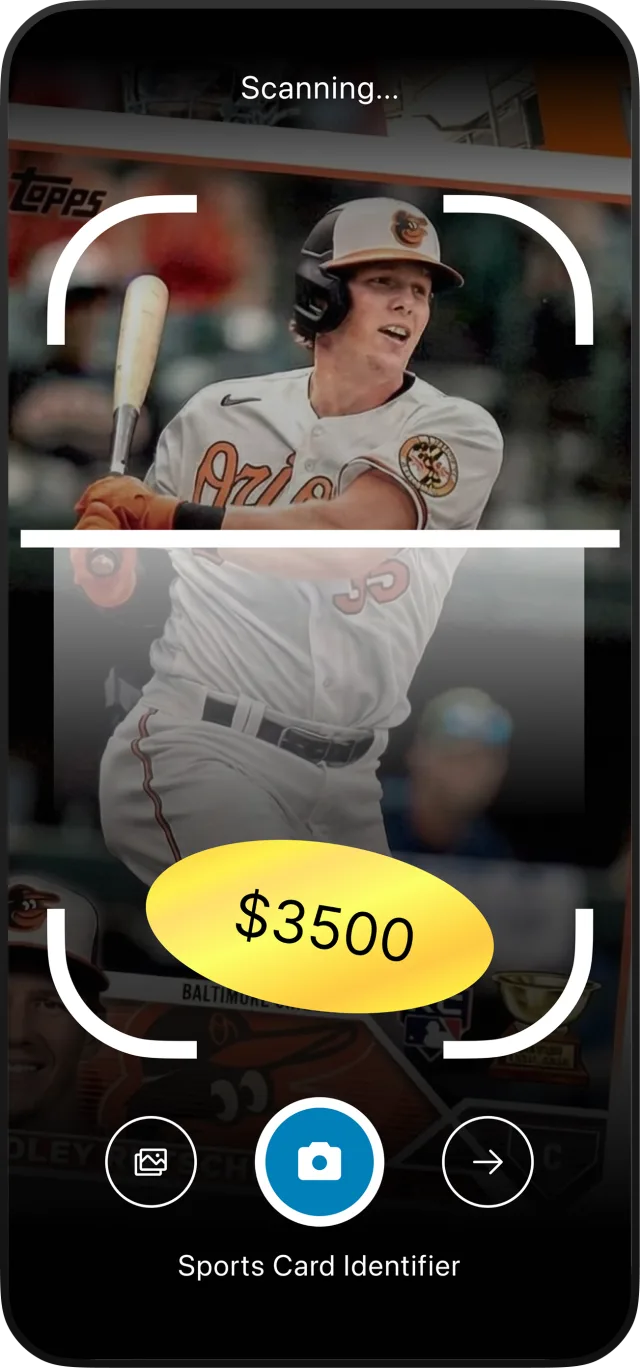
- IDPlayer, set, year, parallel
The card is recognised from one photo, raw or slabbed, in about a second.
- $Low · median · high
Read from eBay sold listings and pricing databases — what buyers paid, not what sellers ask.
- 9.5?Centering · corners · edges · surface
A PSA-style condition estimate, so you know before the submission fee whether grading pays.
What is Valdar?
Valdar is a mobile app that identifies sports cards from a photo and values them from real sales. It is built for collectors who buy at shows, flip on eBay, or inherit a shoebox of cards and want to know which ones matter before spending money on any of them.
The question most collectors face is not "what is this card?" but "what should I do with it?" — keep it, sell it raw, or pay to have it graded. Valdar puts the three facts that answer that question on one screen: the exact card, the range it has traded in, and an honest estimate of its condition.
How does a scan work?
You photograph the front of the card. Valdar matches the image against its catalogue and returns the player, the set, the year and the parallel, which is where most of a modern card's value lives. It then pulls recent sold prices for that exact card and shows the low, the median and the high, so a single lucky sale does not set your expectations.
For raw cards it adds a condition estimate across the four things graders look at — centering, corners, edges and surface — with a projected grade on the PSA, BGS, SGC and CGC scales. That projection is a decision aid, not a grade: only the grading company issues one.
What else does the app do?
- Keeps your collection organised by set, player or era, with raw cards and slabs side by side.
- Re-values every card as the market moves, so the total in your portfolio is today's number.
- Exports a collection report, which is useful for insurance.
- Answers questions about a specific card in plain language — whether a rookie is worth grading, what makes a parallel rare.
Valdar covers basketball, football, baseball, hockey and soccer. It does not buy, sell or consign cards, takes no commission, and is not affiliated with PSA, BGS, SGC, CGC, eBay, Topps, Panini or Upper Deck.

Questions
Is Valdar free?
Yes. Valdar is free to download on iPhone and Android, and the free version scans and identifies cards, shows market value estimates and lets you start a collection. Premium adds unlimited depth for people who scan and track a lot of cards.
Does Valdar give an official grade?
No. Only a grading company such as PSA, BGS, SGC, CGC or TAG issues an official grade. Valdar estimates centering, corners, edges and surface from your photo so you can decide whether a card is worth submitting before you pay the fee.
Where do Valdar's card prices come from?
From eBay sold listings and third-party pricing databases: what buyers actually paid, not asking prices. A value is a reading of past sales, not an offer to buy.
Which sports does Valdar cover?
Basketball (NBA), football (NFL), baseball (MLB), hockey and soccer, raw cards and graded slabs alike.
Can Valdar scan a graded slab?
Yes. Point the camera at a card raw or inside a slab and Valdar identifies it the same way. For a slabbed card the value shown is for that card at its stated grade, so a PSA 10 and a raw copy of the same card are priced separately.